
Older Daviess Civil Files May Be Offline
Not every Daviess civil file lives online. The Indiana State Library's Daviess research guide lists courthouse fires in 1891, 1927, and 1985, each with some record loss, and MyCase is a latecomer besides: Circuit and Superior courts joined Odyssey on December 2, 2019. An old divorce, judgment, or estate file may sit only in a Clerk book, on microfilm, at the State Library, or in a partial surviving series. A dead-end web search settles nothing.
For older records, write to the Clerk with names, an estimated year, the record type, and any known reference. The county genealogy process documents written requests and a narrow fee schedule, though those terms should not be assumed for a current civil copy. Ask which office holds the series. Deeds and mortgages are a different animal; the Recorder's database covers those, while a foreclosure docket or decree stays with the Clerk.
Searching Daviess County Civil Dockets
Start with Indiana MyCase for non-confidential records from Daviess Circuit and Superior Courts. A cause number gives the cleanest match. Have only a name? Use the proper party search, limit the county or court, then filter by civil category, status, or file date. Search a business exactly as filed. Try an attorney search when counsel is your only lead. Wildcards help with shaky spelling, though broad queries can hit the 1,000-result limit.
The official case files for both courts live with the Daviess County Clerk of the Circuit Court. The Clerk's county page gives the address as 200 East Walnut Street, Washington, Indiana 47501. The phone is 812-254-8664. Weekday hours run 8 a.m. to 4 p.m. Go there for public copies, certified records, older files, or documents missing a MyCase link. Call first before mailing a request. The county has no universal copy form or general mail workflow.
- Gather the cause number, full party or business name, and a likely filing period.
- Search MyCase and restrict results to Daviess Circuit or Superior.
- Compare case type, court code, file date, parties, and status.
- Open the chronology and distinguish filings, settings, and orders.
- Ask the Clerk for an official or certified copy when needed.
View Indiana MyCase search tips. The official page lays out every supported search mode and filter.
Those tools are most useful when paired with the local court-assignment map.
Daviess Civil Routing Uses Both Courts
Not all Daviess civil work lands in Circuit Court. Local rule LR14-AR00-3.1 assigns domestic relations, probate, guardianship, adoption, paternity, child support, protection orders, mortgage foreclosure, small claims, and specified juvenile or family matters to Daviess Circuit. Other civil litigation may land in either court. The Superior Court page also mentions civil litigation along with its prior small-claims work. The official Daviess Circuit Court page adds local court context and warns against private ex parte contact with the judge.
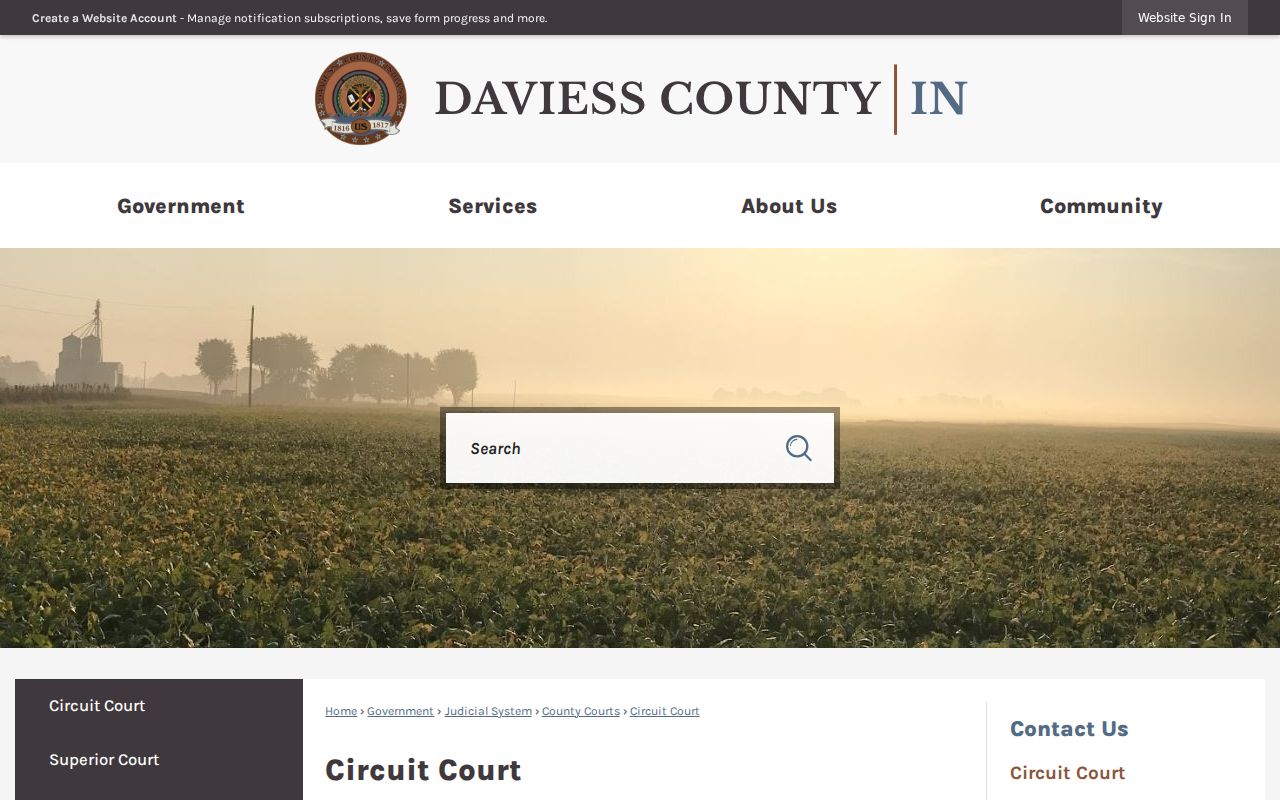
A cause number tells you the route. 14C01 means Circuit; 14D01 means Superior. Judges can transfer matters by order, so trust the current docket over any guess drawn from the case title alone.
Inside a Daviess County Civil Docket
A civil docket summary can carry the cause number, court, case type, filing date, parties, attorneys, status, claims or filing labels, service, appearances, motions, scheduled events, orders, judgment, and disposition, plus financial entries. What shows up varies by case type and audience. A public user may see an order but not every filed document behind it.
| Cause number | Includes county 14, court code, filing segment, case type, and sequence. |
|---|---|
| Party and role | Names a plaintiff, defendant, petitioner, respondent, estate, or other participant. |
| Chronology | Separates filing, service, setting, motion, order, judgment, and later activity. |
| Setting | A planned hearing or event, not proof that it occurred or decided the merits. |
| Disposition | The recorded resolution; later orders can still affect the file. |
One trap: the date inside a cause number marks the filing, not a court date. For setting details, follow Daviess County Court Dates, and confirm any changes with the court office.
Daviess Civil Codes Guide the Search
Case-type codes keep similar-looking records straight in a name search. CC means civil collection, CT civil tort, PL civil plenary, and MI miscellaneous civil. MF flags mortgage foreclosure. Eviction comes in civil and small-claims variants. Read any EV result alongside its court and full case number.
- SC
- Small claims, assigned to Circuit under the Daviess rule.
- DC, DN, DR
- Domestic-relations variants with access rules different from an ordinary tort.
- EM, ES, EU
- Estate miscellaneous, supervised, and unsupervised cases.
- GU or GM
- Guardianship categories whose documents may have restricted access.
- PO
- Protection order, with protected data and a specialized statewide route.
More codes worth knowing: AD for adoption, JP for paternity, TR for trust, and TS or TP for tax sale or tax deed. Treat them as indexing labels, never as legal conclusions.
Civil Case Types on the Docket
Daviess civil records span money disputes, family matters, and estate administration. Collection, tort, and plenary cases tend to carry broader public summaries. Mortgage foreclosure is a Circuit assignment. Small claims also belongs in Circuit rather than any separate city or small-claims court. In fact, the official MyCase selector lists no current Daviess municipal court. The former County Court identifier 14E01 is abolished.
Family cases, paternity, adoption, juvenile matters, estates, guardianships, mental-health proceedings, and protection orders all demand a closer access check. A case may be indexed. Its documents may stay out of view. Separate Indiana public-record systems exist for protection orders, guardianship, child-abuse matters, and the like. A missing MyCase document proves nothing. The Clerk may still hold the record.
- Ordinary civil: collection, tort, plenary, miscellaneous, and eviction variants.
- Property-related court cases: mortgage foreclosure, tax sale, and tax deed.
- Family: dissolution, paternity, support, and adoption.
- Probate: estates, guardianships, and trusts.
- Special access: protection, juvenile, and mental-health matters.
Daviess Small Claims Stay in Circuit
Daviess County sends every small-claims filing to its Circuit Court under the local assignment rule. The dollar limits are $6,000 for a person filing alone and $10,000 when the claimant is an LLC or corporation. The filing fee runs $97. Fees and rules shift over time, so confirm the numbers with the clerk before you hand anything in. For the full procedure, the county's Small Claims page posts the 2025 Indiana Small Claims Manual.
View the Daviess small-claims source.
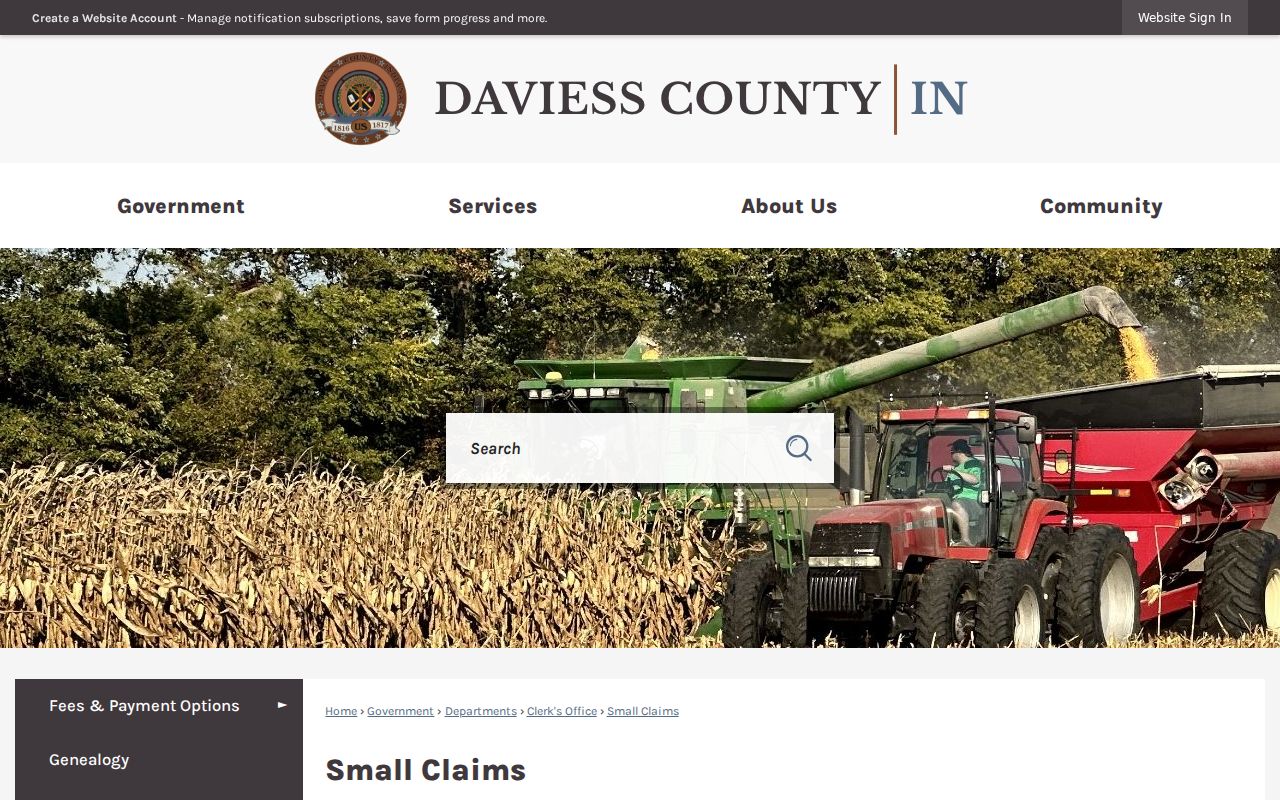
Daviess County points filers straight to the current state manual. The Circuit route stands, with no city-court detour.
Service affects the total: The county table adds $10 for each defendant after the first, $28 for sheriff service, $10 for each garnishee beyond three, and $28 for post-judgment sheriff service where applicable.
Civil Docket Settings and Hearings
A setting marks a planned event, nothing more. The entry does not prove a hearing occurred or that either side prevailed. Civil dockets name these events directly: status conference, motion hearing, mediation, final hearing, trial, or another court event. A single scheduling order can set several deadlines. A continuance may reset one date. That reset does not resolve the case.
Compare the most recent docket entry with any earlier notice. Conflicts happen. Call the office for the court code shown. Daviess Circuit lists 812-254-8670, and Superior lists 812-254-8671. Courtroom and schedule questions go to the court itself, never a private message to a judge. A certified copy of a decree or order is not a screen print; the Clerk provides certification.
Civil flow: Filing › service › response and motions › settings or mediation › ruling or trial › judgment and later enforcement.
Daviess Civil Fees Depend on Type
Daviess County posts civil filing fees by category. Treat that table as a starting filing charge only. Service, added parties, later process, and other statutory charges can change the total. Confirm the right case code and the final amount with the Clerk.
| Local filing line | Published amount |
|---|---|
| CT, PL, CC, MI, and DR | $157 |
| Mortgage foreclosure | $157 |
| Small claims | $97 |
| Adoption | $157 |
| Paternity | $176 |
| Estate or guardianship | $177 |
View the Daviess filing-fee source.
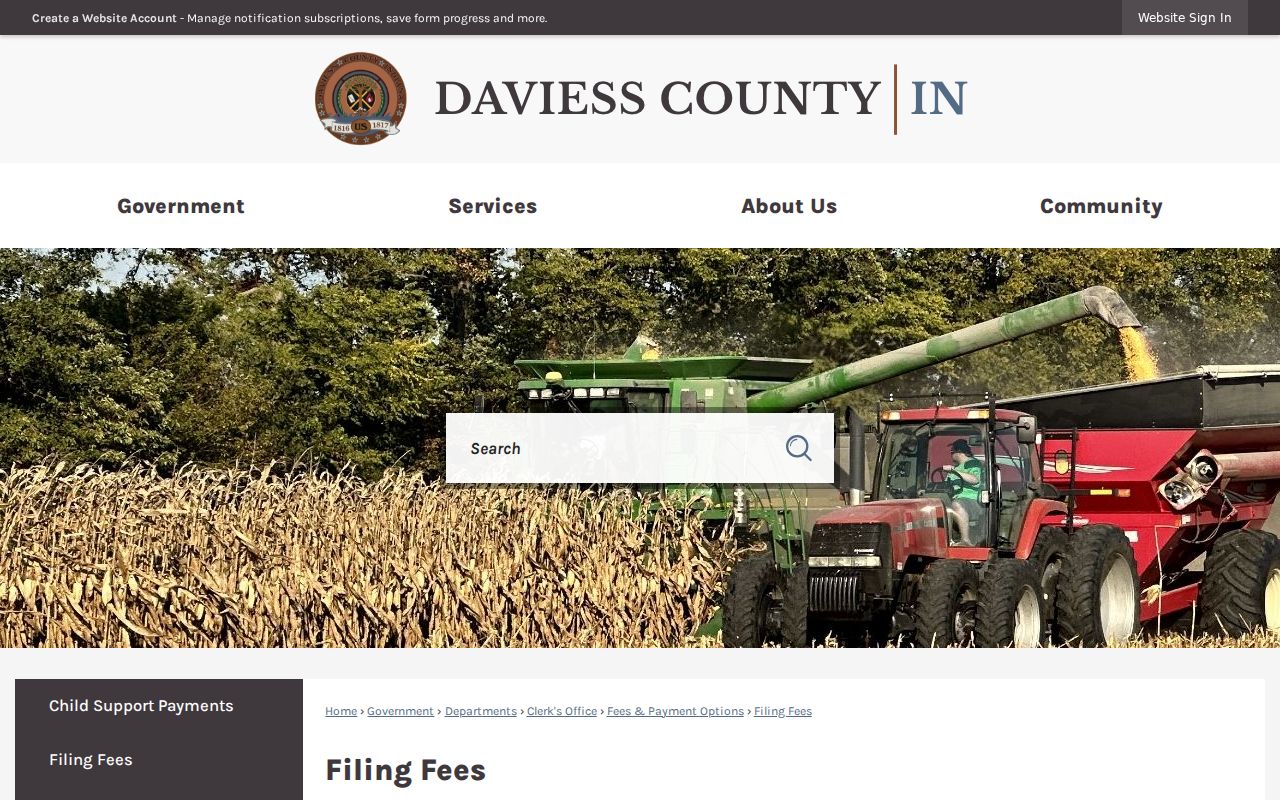
Daviess also lists service add-ons and special fee lines.
Civil Docket Access Rules
Indiana presumes public access to court records. The rules then wall off protected files. Adoption, guardianship, juvenile, mental-health, and protection-order cases all face real limits. Parts of paternity and domestic-relations files do too. Rule 5 adds another layer. It protects personal identifiers, certain victim and witness information, medical and treatment records, privileged material, and sealed documents. Access also varies by role. The public, a party, and an attorney each see different things.
Daviess County also posts its own route. The Daviess protection-order page explains local filing and points to state forms.
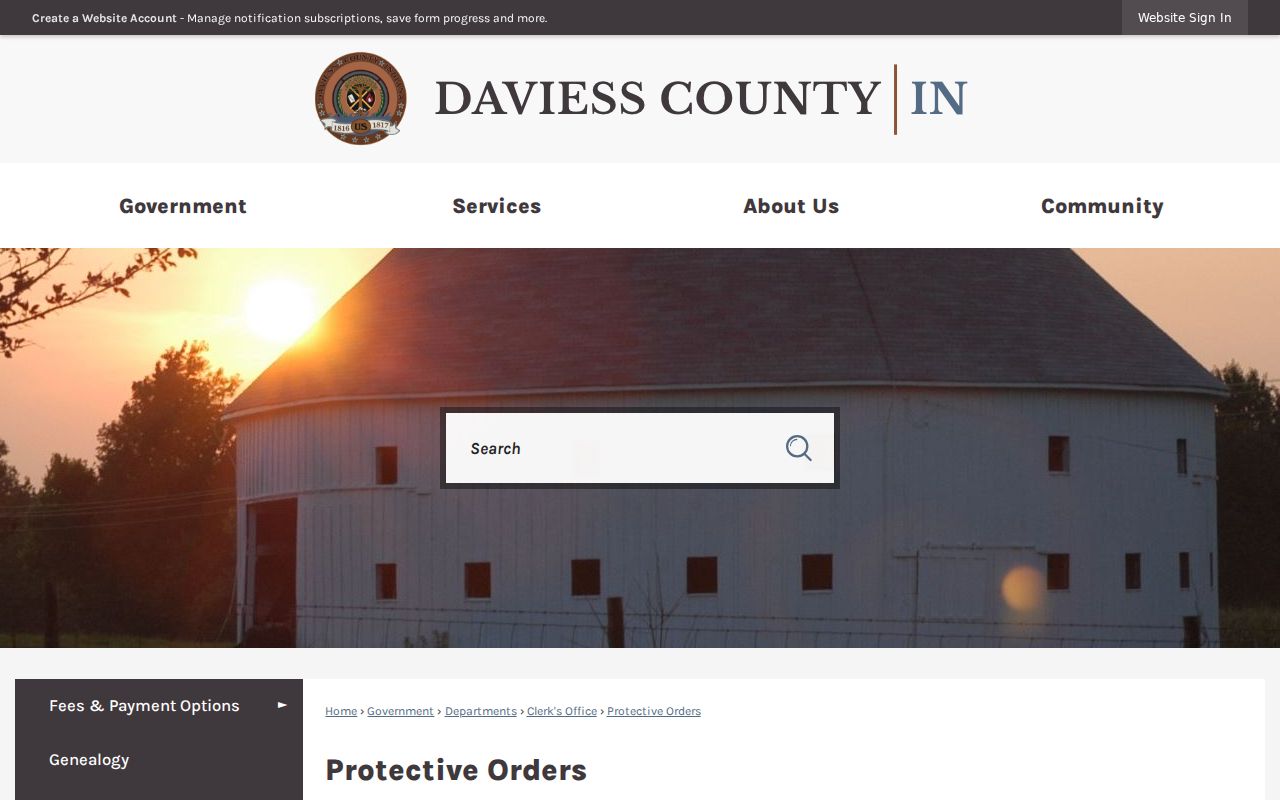
Filing locally changes none of those privacy protections. The Indiana protection-order forms source carries the current statewide packet, and its rules still shield addresses and other sensitive details.
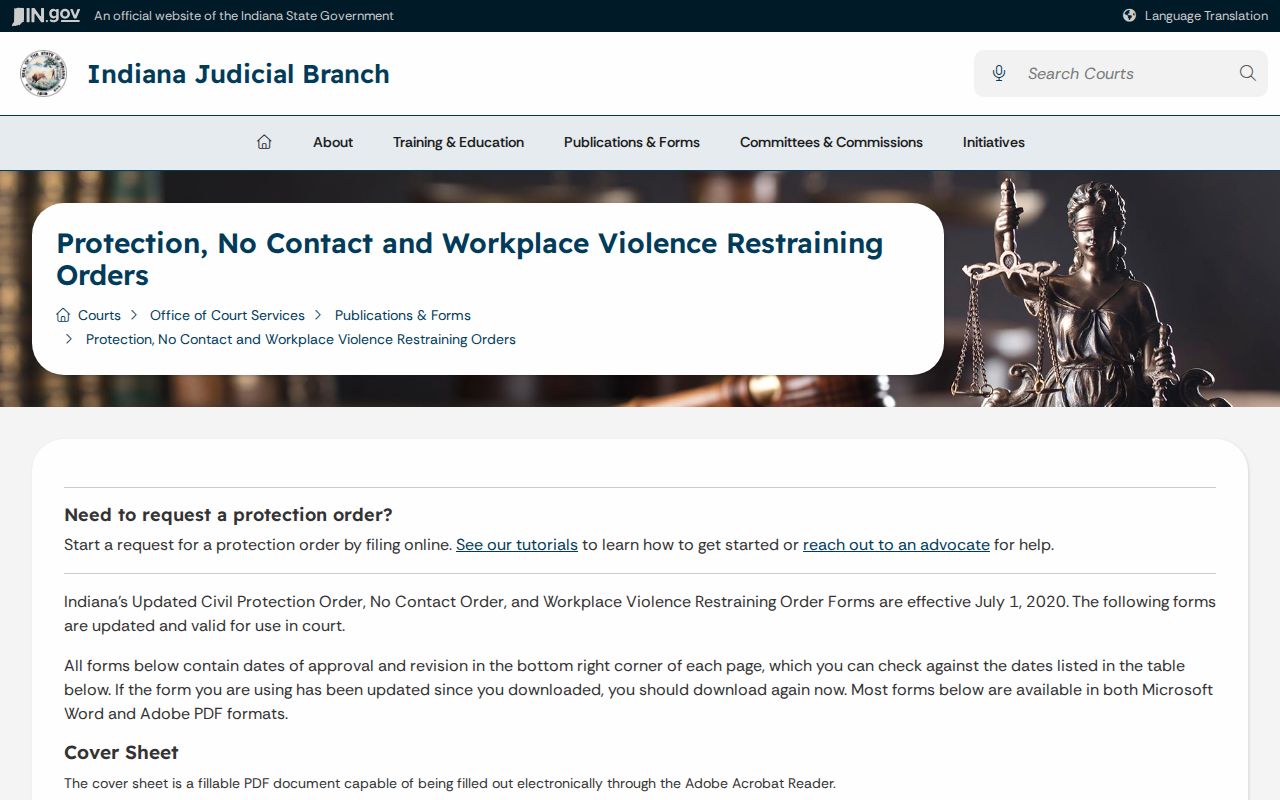
The packet separates public filing steps from confidential-information forms and service documents.
Access boundary: MyCase is not the official court record. Request a public copy from the Clerk, a transcript from the court reporter, and excluded material only through the process allowed by the Indiana Rules on Access to Court Records.