
Searching Daviess County Criminal Dockets
For Daviess cases in Odyssey, Indiana MyCase is the public front door. Both trial courts have run on Odyssey since December 2, 2019. A cause number is the best key. It encodes county, court, filing period, case type, and sequence in one string. Pick the search that fits what you already know. Choose Case, Name, or Attorney. Then limit results to Daviess Superior or Daviess Circuit and pick a criminal category. MyCase caps broad queries behind CAPTCHA. So tighter is better.
When the online docket search stalls, the county's Clerk's Office page is the fallback. The Daviess County Clerk of the Circuit Court holds the official file at 200 East Walnut Street, Washington, Indiana 47501. Phone 812-254-8664 during office hours. Hours run Monday through Friday, 8 a.m. to 4 p.m. Call before mailing a request. The published post-office-box route exists for genealogy work.
- Open MyCase and choose a case, name, or attorney search.
- Enter one known identifier, then limit the court and criminal category.
- Compare court code, type, status, and file date before opening a result.
- Read the case summary from oldest event to newest.
- Ask the Clerk for an official balance, unavailable copy, or certification.
Daviess Criminal Searches Start at 14D01
Daviess Superior Court is where most criminal dockets live. Its official page says the court handles all criminal offenses. Local rule LR14-AR00-3.1 routes criminal cases there except for listed exceptions. Infractions and ordinance violations also land in Superior under the same rule. Neither counts as a felony or misdemeanor class. In Odyssey, Superior carries the identifier 14D01.
Routing still bends. A listed exception can sit in Circuit Court, identifier 14C01. A later felony tends to follow the court already holding the first pending felony. Judges may also transfer a case by order and acceptance. The court code on the result controls. The old identifier 14E01 is abolished and only shows up in archived material.
For assignments straight from the court, see the Daviess Superior Court page.
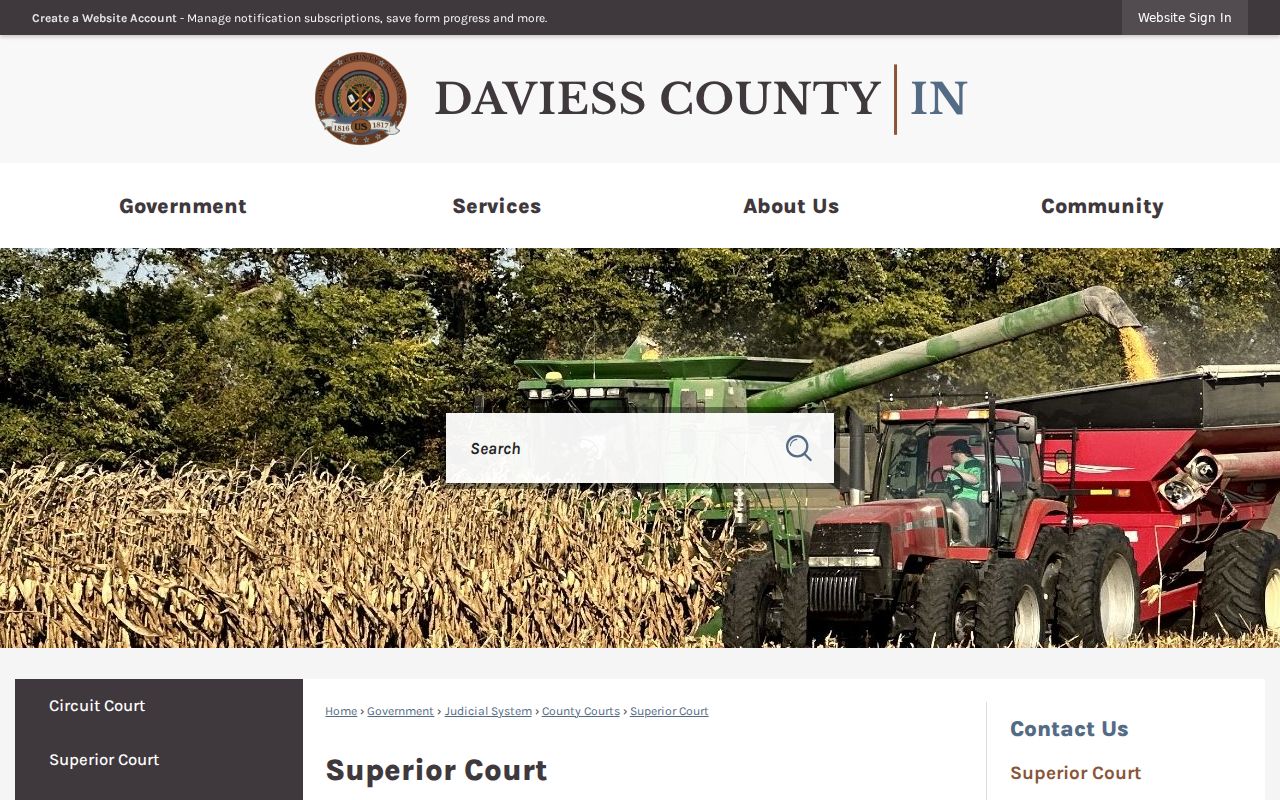
The county source supports beginning with Superior while still checking the returned court code.
Inside a Daviess County Criminal Docket
Think of a public case summary as a timeline, not a story. It can carry the cause number, court, party, charge number, citation or reference number, offense date, statute, description, degree or class, and status. Later entries may log service and appearances. Hearings, motions, pleas, judgment, sentencing, probation activity, financial events, and public disposition can follow. Fields vary with case type and age.
| Cause number | A code such as 14D01-YYMM-CM-#####; YYMM is tied to filing, not a hearing date. |
|---|---|
| Charge | The statute, description, and degree or class alleged. Filing is not judgment. |
| Events | Dated filings, service, settings, appearances, motions, and orders. |
| Plea and judgment | Separate events; a plea alone does not state the final result. |
| Disposition | The recorded resolution, subject to later orders. |
Read entries from oldest to newest, then check the last one again. A docket records steps, not findings of fact.
Daviess Felony Codes Span Two Eras
Felony filings today run from F1 through F6. Older Daviess records may show FA through FD instead, and MR marks murder. Other codes include CM for misdemeanor, MC for miscellaneous criminal, PC for post-conviction, and CF for an older felony access class.
- IF
- Infraction, normally routed to Superior but not a felony.
- OV
- Ordinance violation, also assigned to Superior.
- Case type
- The filing category, not a substitute for the charge or judgment.
- Disposition
- The recorded outcome at the case or charge level.
A code helps you index a record. If it touches a filing, deadline, or request, verify with the Clerk or counsel.
How a Daviess Criminal Case Moves
Each docket entry marks a separate act. "Case opened," "charge filed," "summons filed," and "initial appearance" are not interchangeable. A plea is not an admission, a judgment, or a sentence. A motion requests action; an order records what the court did. A setting schedules an event. A continuance moves it. Read them as distinct steps. That keeps the first allegation from being mistaken for a final result.
Docket flow: Charge filed › initial appearance › pretrial settings and motions › plea or trial › judgment › sentencing and later entries.
The path can shift mid-case. Charges may be amended or dismissed, and a dismissal with or without prejudice does not erase every related record. Use Daviess County Court Dates to read a setting, then confirm any change with the court.
Daviess Criminal Balances Need Verification
The local filing-fee page lists $185 for a felony or misdemeanor filing. That figure is not the whole obligation. Statutory costs, fines, probation items, restitution, service, and later events can all differ. MyCase shows a financial summary. Official help warns it may be stale or incomplete. The Clerk holds the current balance.
Before paying: Match the cause number and court, then call the Daviess County Clerk at 812-254-8664 for the official amount and accepted route. Verify a warrant flag or missed setting directly too.
Daviess Superior answers at 812-254-8671; Circuit is 812-254-8670. Contacting a judge privately is not a records or scheduling shortcut.
Courts That Hold Criminal Dockets
Washington's courthouse holds Daviess's two state trial courts. Superior is the regular criminal court. Circuit keeps listed exceptions plus juvenile and related matters that fall outside ordinary public criminal searches. One elected Clerk serves both, acting as filing office, payment office, and county record keeper.
Daviess County Clerk
200 East Walnut Street
Washington, IN 47501
812-254-8664
Monday-Friday, 8 a.m.-4 p.m.
Daviess Superior Court
Criminal, infraction, and ordinance routing
812-254-8671
Federal criminal records are a separate world. Daviess sits in the Evansville Division of the U.S. District Court for the Southern District of Indiana, which runs on PACER, not MyCase. State appeals go to the Indiana Court of Appeals.
Daviess Expungement Changes Search Results
Indiana Code 35-38-9 builds the expungement framework. A granted expungement can change public access to a qualifying case, and MyCase states that granted petitions may drop from public view. Pending or denied petitions may stay visible where allowed. So a missing result never proves no case existed.
The official statute text is at the Indiana General Assembly site.
The statute explains a changed search surface. It does not turn MyCase into a complete history.
Sealed Dockets and Public Access
Indiana's access rules cut both ways. Access Rule 4 opens court records to the public. Rule 5 carves out whole categories. Mental-health records are sealed completely. So are medical and treatment records, privileged material, and sealed documents. Juvenile delinquency and CHINS cases sit outside the ordinary public stream too, along with protected victim and witness information and full account data. A single Daviess County matter can hold both a public order and a private treatment record. The official Rule 5 source spells out each exclusion. It shows how each applies to a criminal docket.
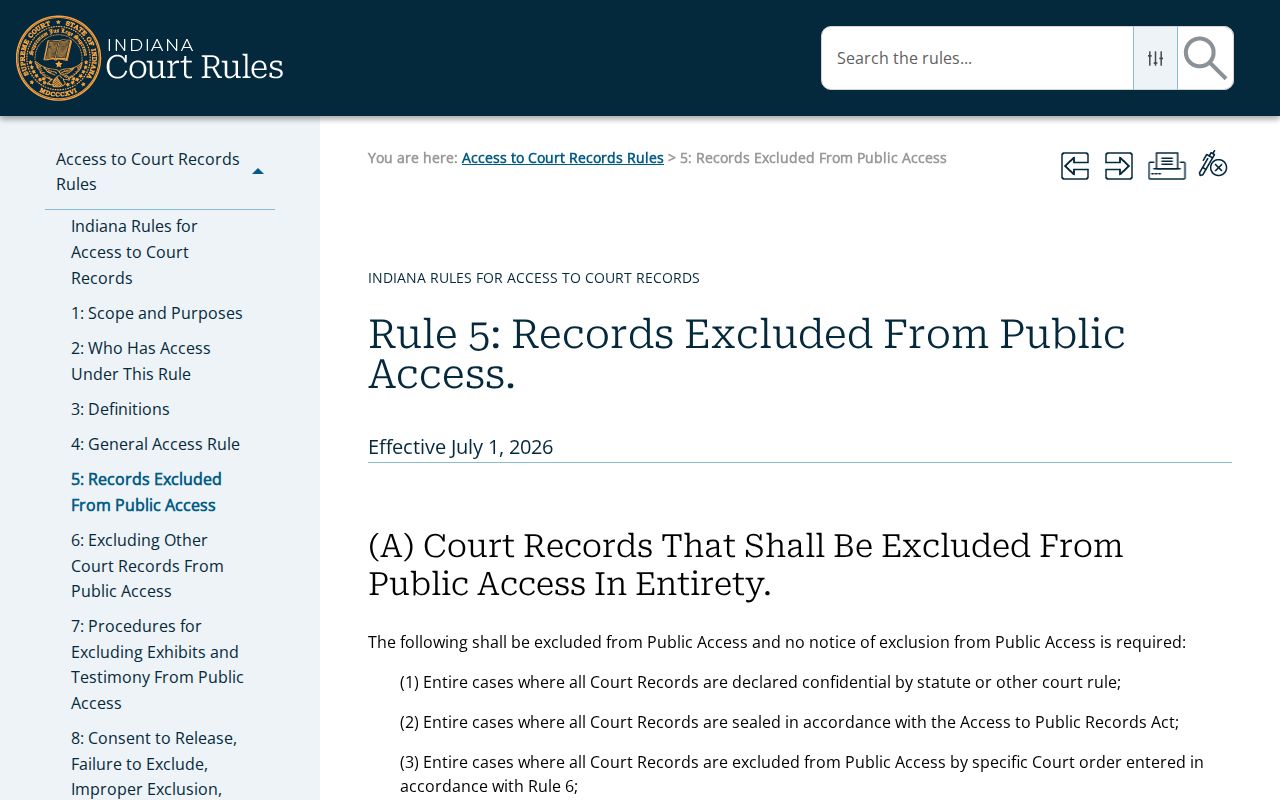
The rule protects specific data and records; it does not hide every name.
Key access rules:
Access Rule 6 permits exclusion in extraordinary circumstances.
Access Rule 9 provides a court process for a verified request about excluded material.
Indiana Code 5-14-3 supplies a broad framework read with court rules.
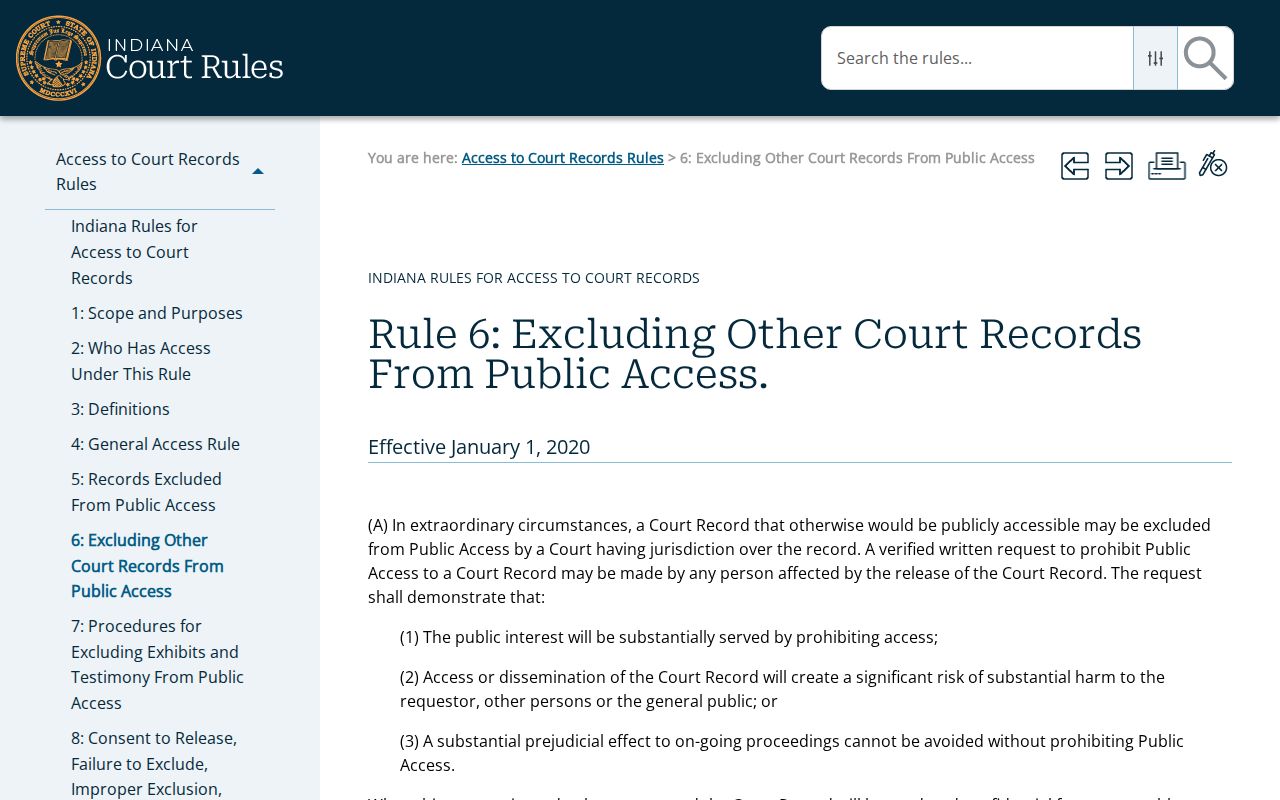
Rule 6 asks courts to act narrowly, based on the facts at hand. View the Rule 9 source.
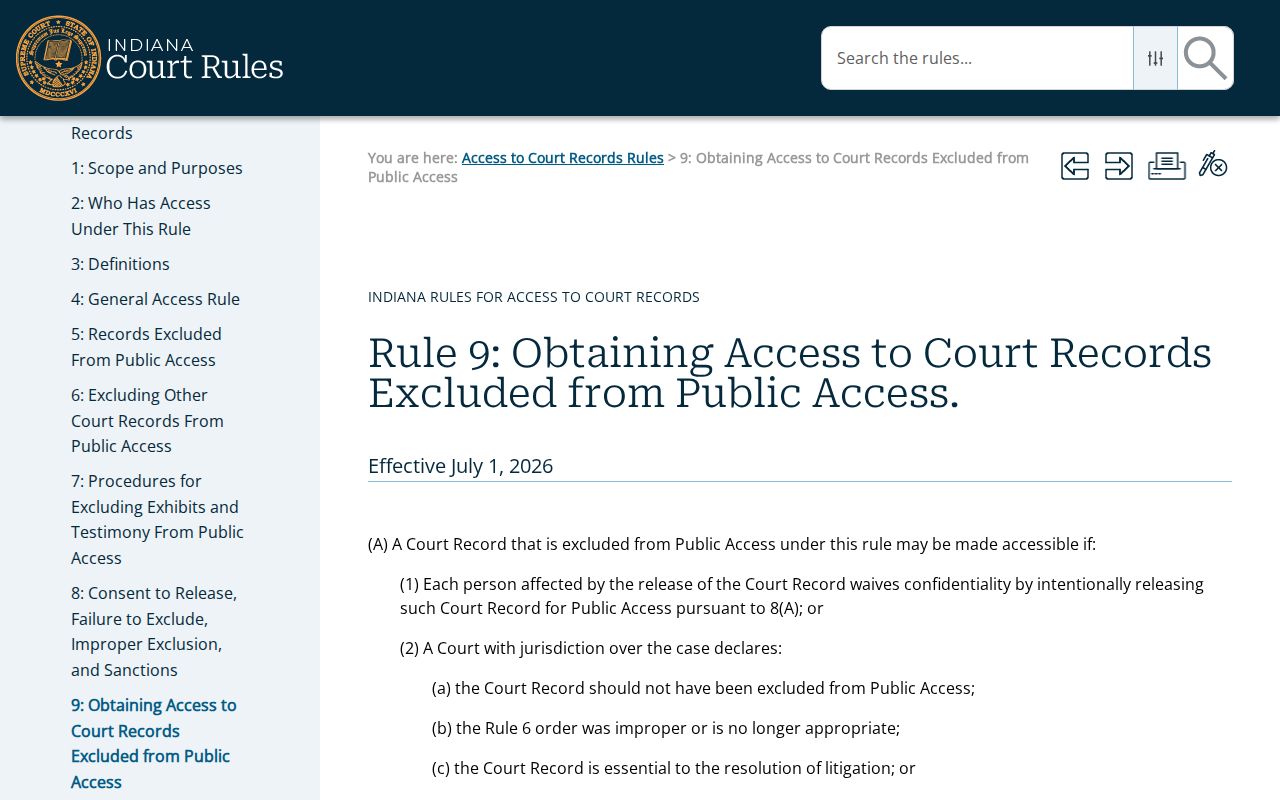
Rule 9 confirms that excluded material is not reached through a normal portal search.
Daviess Criminal Workload in Context
The official 2025 weighted-caseload report puts Daviess Superior at 1.00 judicial need, 1.00 total judicial officers, and 1.00 utilization. In plain terms, that compares the estimated work from new filings against the judicial resources on hand. It is not a count of pending cases. It promises nothing about speed or any party's conduct. The year and the court both matter here. Superior handles the routine criminal, infraction, and ordinance stream under the local rule.
A second figure comes from the 2024 Judicial Service Report. It lists $640,164 as Daviess criminal indigent-defense cost for that calendar year. Treat it as a public system-cost measure. It is not a cost per defendant or per case. Together the numbers show how routing and public defense fit into county court infrastructure. They still say nothing about how one case will move or end.