
Getting Daviess County Court Records
Begin at Indiana MyCase to find the cause number and check whether a public document link is attached. Need a kept copy? Contact the Daviess County Clerk, not the Recorder. The county courts page routes copies of marriage records, divorce decrees, child-support orders, judgments, and other court documents to the Clerk or the court itself.
- Find the case number, court code, caption, and likely filing or hearing date.
- Name the exact item, such as an order, judgment, decree, filing, or chronological case summary.
- State whether a plain or certified copy is needed.
- Contact the Clerk by phone or at the counter; use mail for the documented written genealogy route.
- Confirm current fees, payment, postage, delivery, and any identification or access requirement before sending funds.
The state's court-record request instructions split the work cleanly: county documents go to the county Clerk, transcripts go to the court reporter, and bulk data goes to the Office of Court Services.
That split keeps a document-copy request from landing on the wrong desk at the judge or reporter.
Daviess Clerk Copy Desk
The Daviess County Clerk of the Circuit Court covers both courts. One is 14C01 Circuit. The other is 14D01 Superior. You'll find the office in the Daviess County Courthouse at 200 East Walnut Street, Washington, Indiana 47501. Published hours run Monday through Friday, 8:00 a.m. to 4:00 p.m. The main number is 812-254-8670.
Daviess County Clerk
200 East Walnut Street
Washington, IN 47501
812-254-8670
Monday-Friday, 8:00 a.m.-4:00 p.m.
The official Clerk page lays out the office's filing, payment, and record duties. Staff can locate a file or explain access. They cannot give legal advice. The office publishes no general court-record email, fax, dropbox, online certified-copy checkout, or public terminal, so call before counting on any of those.
Court Record Types
A court file can hold far more than the docket line you see online. What's inside varies with the case type and the access rule that governs it. Circuit often carries probate, family, juvenile, guardianship, foreclosure, protective-order, and small-claims records. Superior handles most criminal and infraction files. Ordinance files sit there too, along with other civil matters assigned to it.
- Chronological Case Summary entries and case metadata
- Complaints, petitions, motions, appearances, and service returns
- Orders, judgments, decrees, sentencing records, and dispositions
- Public exhibits or attachments when filed and accessible
- Financial assessments, payments, credits, and balances
- Records of Judgments and Orders, often called RJO
A transcript is a different animal. It is the reporter's word-for-word written record of what was said in the courtroom. The Clerk's docket or case file never turns into one just because it lists that a hearing took place.
Daviess Online Documents Vary by Case
Indiana's public-access matrix sorts what you can get into Orders Online, Other Documents Online, Orders in Person, and Other Documents in Person. Many civil, collection, mortgage, estate, criminal sentencing, infraction, small-claims, and tax categories may carry non-confidential online orders or files. Domestic relations, adoption, guardianship, juvenile, mental-health, protection-order, and granted-expungement material stays far more restricted.
| Access result | Meaning | Next step |
|---|---|---|
| Document link | A public electronic copy is available to that audience | Open and verify the case details |
| Event, no link | The docket records an act, but the file is not online | Ask the Clerk about an accessible copy |
| No public result | It may be restricted, old, absent, or in another system | Confirm the correct custodian and access rule |
The Indiana public records hub pulls together MyCase, request guidance, forms, bulk data, and specialized systems.
Those separate routes keep a missing MyCase link from being mistaken for a missing legal record.
Inside a Daviess County Court Record
A clear request names the exact field or paper you need. Some fields sit blank, redacted, excluded, or simply irrelevant in a given case. Treat a case summary as an index of activity, not a full story of what happened.
| Cause number | The county, court, filing period, type, and sequence identifier. |
|---|---|
| Case style | The court caption or short title. |
| Parties and roles | Public parties identified as plaintiff, defendant, petitioner, respondent, or another role. |
| CCS | The dated chronological list of filings, settings, orders, service, and outcomes. |
| Orders and judgments | Directions or rulings by the judge, subject to public-access limits. |
| Disposition | The recorded result of a claim, charge, or case stage. |
| Financial data | Costs, credits, payments, and displayed balance; confirm current figures with the Clerk. |
Need the cause number first? The Daviess County Case Lookup will get you there before you order papers. Match the court and caption before requesting a copy.
Daviess Certified Copy Checklist
A certified copy carries the Clerk's certification, and it is not the same as a printout from your browser. Tell the Clerk why you need certification only as far as it helps identify the right product. Ask the receiving agency whether it wants a seal, specific certification language, or some other authentication.
- Cause number and court, if known
- Full title or names needed to locate the case
- Exact judgment, decree, order, or filing requested
- Approximate filing or hearing date
- Plain or certified copy choice
- Preferred delivery and requester contact details
Daviess publishes no universal general-copy form. Treat this list as a practical locator checklist, not a claim that every field is mandatory. Confirm the current method and payment before you mail anything.
Fees and Certified Copies
The county genealogy page lists $0.10 per page and $3 for certification. Those figures are expressly genealogy research and copy charges. They are not a universal price for a judgment, divorce decree, estate paper, or modern court record. The Clerk must confirm the current charge.
| Published item | Amount | Scope |
|---|---|---|
| Genealogy copy | $0.10 per page | Published genealogy route |
| Genealogy certification | $3 | Published genealogy route |
| Other court copy | Confirm with Clerk | Depends on record and service |
The county fees and payment page is the official local navigation point.
Ask about copying, certification, postage, and payment together so the request does not stall.
Daviess Transcript Rates Follow Local Rule
Transcript requests go to the court reporter, never the Clerk copy desk. Daviess local rule LR14-AR15-3.0 sets the published rates. A private, public, or indigent transcript costs $4.50 per page. An ordinary copy runs $1 per page. An expedited transcript delivered within seven working days costs $6 per page.
The rule also imposes a $50 minimum. Public transcript requests must be written and require at least a 50% estimated retainer. An index or table of contents runs $5 per page. Binding is billed at the reporter's current hourly rate. Fees can change, so ask for an estimate before you count on any total.
Clerk copy and transcript are separate products. Request a filed order or case document from the Clerk; request the spoken-proceeding record from the court reporter.
The Daviess local rules are the authority for the listed reporter charges.
Sealed Records and Public Access
Indiana Access Rule 4 starts from a premise of public access to court records. That covers paper and electronic, subject to exclusions. Rule 5 then pulls whole cases or single records out of public view. Excluded categories include mental health and some paternity matters. They also include juvenile material, protected medical and treatment information, privileged or in-camera papers, and sensitive personal or financial data. An exclusion indicator may stay public. The protected content behind it does not.
Indiana court rules govern the file. The Access to Public Records Act supplies a broad statutory framework, but it does not override court-specific exclusions, sealing, expungement, or juvenile confidentiality.
Rule 9 provides formal paths for requests involving excluded records. MyCase is not that process.
The Indiana Rules on Access to Court Records index spells out who may see what.
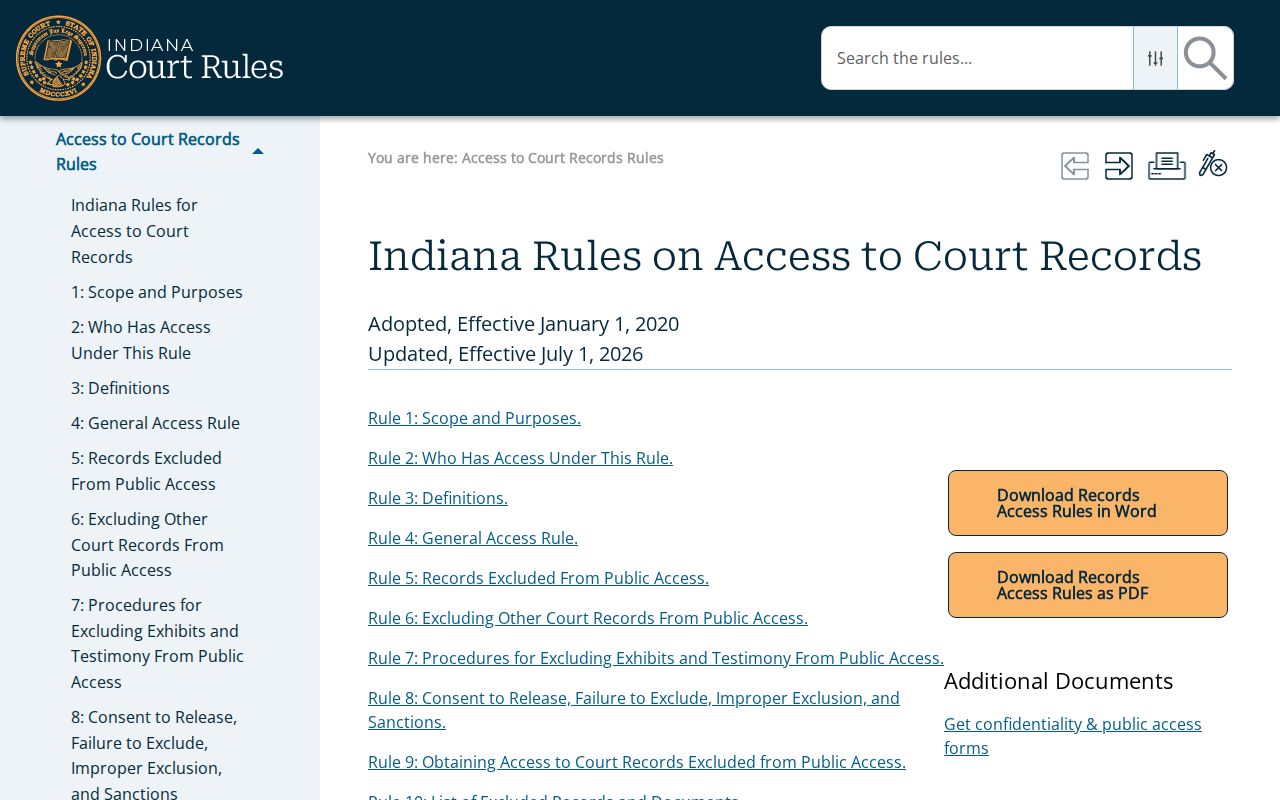
Access can differ for the public, a party, an attorney, or anyone else authorized by law. A public account does not create party rights.
Daviess Redaction Uses Court Forms
Rule 5 keeps certain details out of public court records. That shield covers full Social Security numbers. It also covers account and PIN data, some victim and witness contact details, and medical or drug-treatment records, among other excluded material. A filer who must redact something submits an ACR notice. It comes with a public version that hides the protected content but keeps the rest visible.
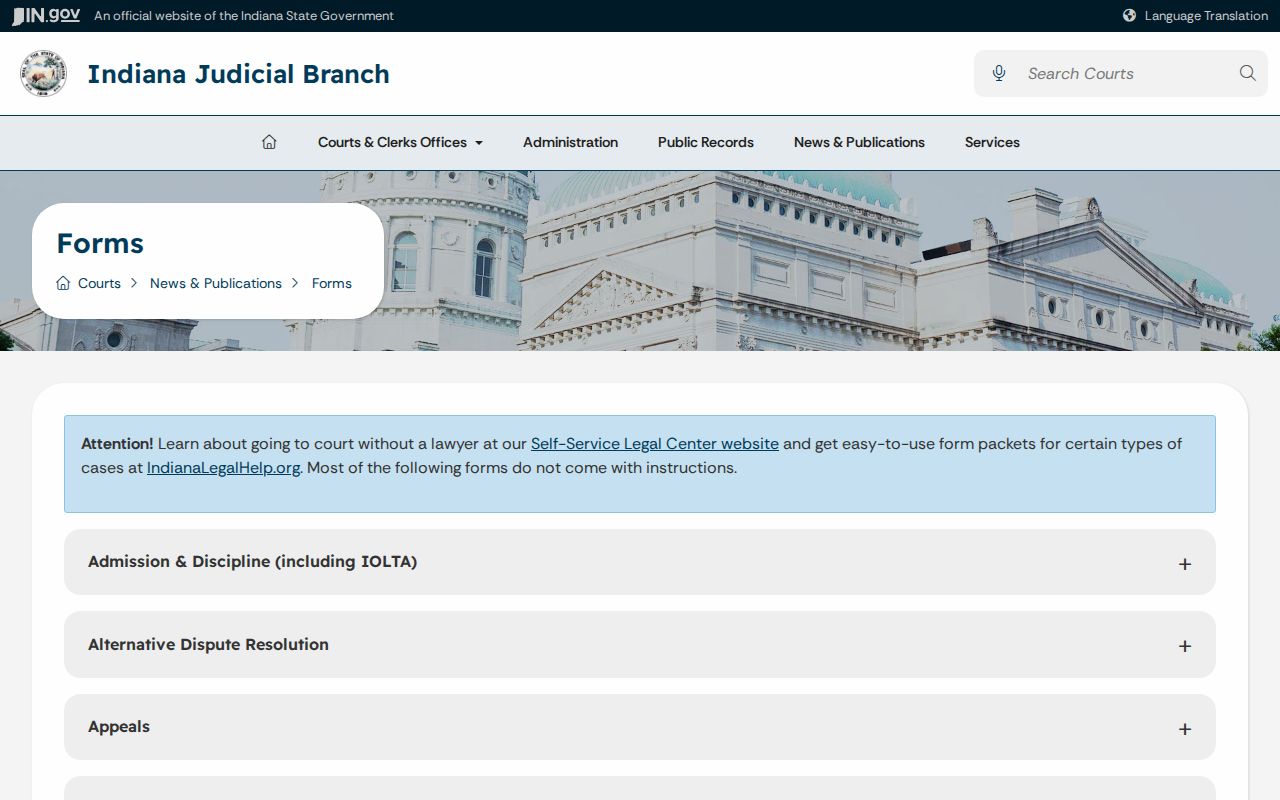
Need the paperwork? The Indiana Judicial Branch forms page posts the official public-access ACR form. It also posts other court forms a Daviess County filer might need. That page shows the current version of each form the courts accept. It also lists related filing forms in one place.
Be clear about what the ACR form does. It flags protected information during filing; it never turns an excluded record into a public one. For questions about a particular restricted file, ask the Clerk, the court, or qualified counsel.
Older Daviess Records and Microfilm
A missing web result may reflect age rather than secrecy. Daviess Circuit and Superior dockets entered Odyssey in 2019. Older case records simply may not sit in the online docket search. Fire adds another layer of loss. Courthouse fires struck the county in 1891, 1927, and 1985, and the Indiana State Library reports some records did not survive. What remains of old marriage, divorce, estate, and court material may live in Clerk books. It may also sit on microfilm or in State Library holdings rather than any court docket database.
Taking the written genealogy route works best when you give names, a date range, and any fact that narrows the search. Mail and in-person requests to the county are the paths that hold up. Do not stretch that into an email, fax, or vendor shortcut nobody has authorized. And skip the Recorder's Doxpop property-record service too. It is the wrong office and system for a Daviess court case.
If an old matter will not surface, ask the Clerk what date range the office holds. Ask whether microfilm or the State Library Daviess guide is the sensible next step. A gap online does not prove no proceeding ever occurred.